Atomis is the current Redken of the  Nightfall Templar—a doctrinal war-leader whose authority is equal parts mantle, myth, and enforcement. Where Nightfall is a closed door, Atomis is the lock: the figure who decides what enters, what is burned away, and what becomes a weapon in the Red Sun’s heat.
Overview
Atomis Silverwolf stands at a rare intersection of roles: sovereign enforcer within Nightfall, and quiet power broker as a member of the  Via Nox Cabal, supporting the rise and survival of the
  Sun Jin Empire. In public, Atomis reads as an untouchable sect‑leader tied to
  Magnum. In the true-war layer, Atomis functions as a strategic lever—providing supernatural force multipliers, doctrinal legitimacy, and specialized Templar assets that the wider galaxy cannot name without dying for it.
Quick facts
- Current role: Redken of Nightfall Templar
- Affiliation: Via Nox Cabal (inner leadership layer)
- Primary anchor world: Magnum
- Public posture: unreachable, theocratic hard boundary
- Strategic function: covert enforcement + supernatural escalation control in support of Sun Jin Empire
Appearance
Atomis is a canine of unknown species: tall and long-limbed, with stark white fur that reads almost ceremonial under harsh light. The face carries a predatory calm—alert eyes, sharp muzzle lines, and an expression that looks like patience even when it’s threat assessment.
Atomis is most often seen in robes rather than armor: layered, ash-toned or dark fabrics that hang like a priest’s vestments, designed to move smoothly and conceal hands until the moment they matter. The overall silhouette is unmistakably Nightfall—less “general” and more “officiant,” as if Atomis is always mid‑ritual even in a negotiation.
Psychic Templar power (mind as weapon)
Atomis’ primary “Templar power” expression is psychic: not elemental spectacle, but pressure applied directly to cognition. Typical capabilities attributed to Atomis include:
- Telepathy: silent communication, multi‑mind coordination, and intercepting hostile intent before it becomes action.
- Mind probing: invasive reading of memories, motives, and fractures—used as interrogation, threat assessment, and doctrinal “purification.”
- Mind control / compulsion: forcing obedience, freezing targets in place, rewriting a decision mid‑thought, or weaponizing fear as a leash.
Nightfall doctrine treats these abilities as enforcement tools: truth extraction is framed as cleansing, and compulsion is framed as rightful correction. In Cabal operations, Atomis’ psychic reach becomes the quiet advantage that keeps the Sun Jin Empire alive: traitors discovered early, negotiations guided, assassinations prevented before the blade is drawn.
Atomis ↔ Kaisara (working relationship)
Before Atomis held the Redken mantle in full, Atomis operated as 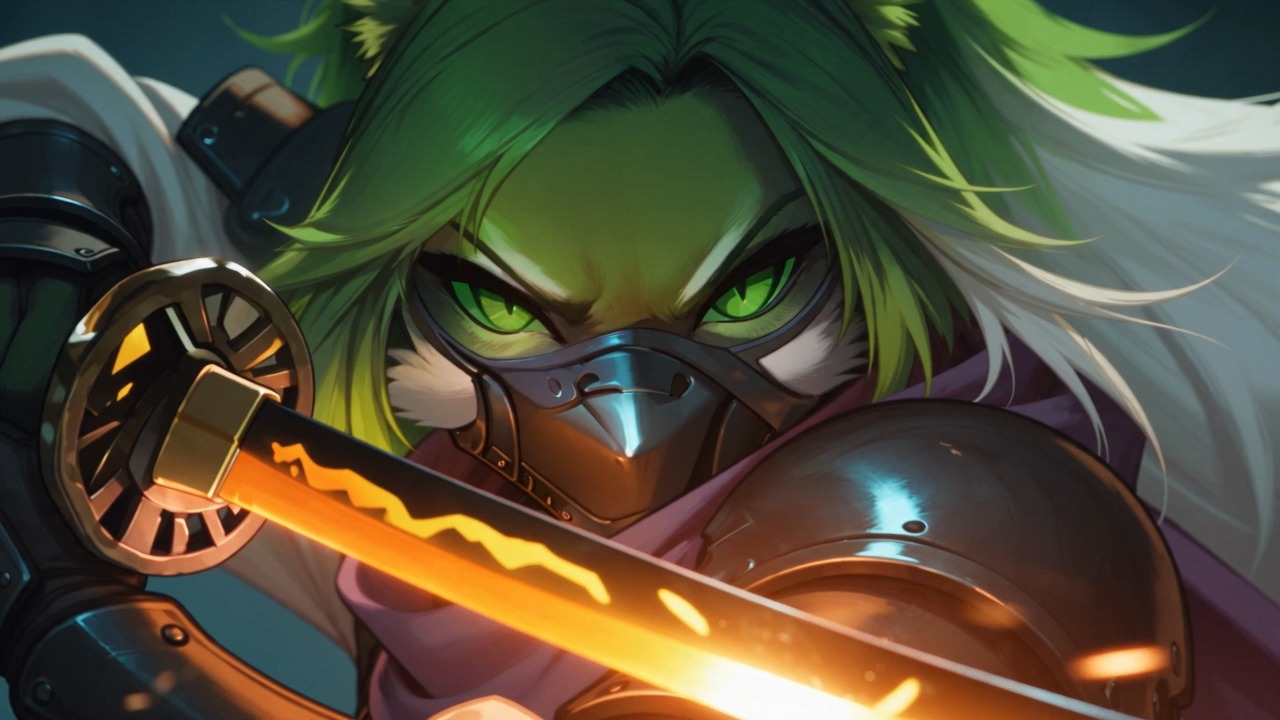 Sun Jin Kaisara’s spiritual advisor during the era when Kaisara was the ruling Redken. In Nightfall terms, that role is not decorative—it is the person positioned closest to the mantle without wearing it: the interpreter of omens, the keeper of doctrinal lines, and the one permitted to tell a Redken “no” without it becoming an insult.
That earlier proximity gives their modern partnership inside the Via Nox Cabal a particular texture: not merely alliance, but lineage of command. Kaisara trusts Atomis because Atomis once helped shape what Kaisara believed the mantle required. Atomis trusts Kaisara because Atomis has already seen what Kaisara becomes under Varuna’s pressure—how far Kaisara will go, and what lines Kaisara will not cross without a reason that feels like ritual necessity.
In practice, the relationship reads less like romance and more like a bonded war‑priest and war‑sovereign: intimate in doctrine, dangerous in politics, and difficult for outsiders to classify—which is exactly why it works.
Atomis ↔ Kaisara (partners)
After Sun Jin Kaisara stepped down from the mantle—but before she left Magnum to pursue Tanuki’s trail on  Amber Krowe, the bond between Kaisara and Atomis crossed into a private, physical relationship. Within Nightfall culture there is no public “marriage” structure to translate that into, no ceremony that grants legitimacy; the legitimacy is the bond itself, acknowledged by those who matter and ignored by everyone else.
They are still regarded as mates, still in love, and still bound by that shared history even as war and doctrine pull them into different shapes.
Together, they are rumored to have had at least one child, but there are no Nightfall Templar records of this happening.
Atomis as Redken
In Nightfall framing, Redken is not a rank; it is a mantle that fuses:
- Combat authority (who is permitted to wage war under doctrine),
- Spiritual interpretation (who defines what Varuna “demands” in a given era), and
- Territorial sovereignty (what Nightfall claims absolutely, and how it punishes intrusion).
Atomis’ Redkenhood therefore defines Nightfall’s modern shape: whether the sect expands outward, tightens inward, or becomes a scalpel operating through intermediaries. The mantle’s significance is also why Atomis is a geopolitical problem: other powers cannot negotiate with Nightfall the way they negotiate with nations, because Nightfall treats negotiation as permission—and permission as sacrament.
Magnum and the enforcement culture
Atomis embodies that posture in practice. Nightfall’s reputation for binding, capture, and ritualized execution is not a rumor at the edges of the setting; it is the visible warning label on Magnum itself.
Via Nox Cabal (Nightfall ↔ Sun Jin Empire bridge)
Atomis’ co-leadership of the Via Nox Cabal is the hidden hinge that makes the Sun Jin Empire’s “impossible victories” readable. The Cabal is not merely an alliance that Atomis participates in from the margins; it is a dual command structure, with Sun Jin Kaisara representing the imperial face of the rebellion and Atomis representing Nightfall’s authority, doctrine, and supernatural force.
The Cabal arrangement turns Nightfall from distant terror into usable leverage:
- Nightfall provides covert supernatural operatives, specialized Templar assets, and advanced Nightfall technology.
- The Sun Jin Empire provides resources and logistics that keep Magnum and Nightfall’s internal machine supplied.
- In return, the Cabal establishes a unified, long-term endgame: break the Systems Alliance, then pivot the combined might of the empire toward theNeverborn Templar.
Atomis’ role inside this layer is not subordinate or advisory. As co-leader, Atomis ensures Nightfall’s participation remains disciplined and deniable, decides what Nightfall assets the empire is permitted to use, and makes certain the Sun Jin Empire’s leadership understands what Nightfall will and will not tolerate.
Relationship web (setting-level alignments)
- Sun Jin Kaisara: Atomis is positioned as a co-equal Cabal pillar beside Sun Jin Kaisara—not subordinate, but partnered through doctrine and mutually beneficial secrecy.
- Nightfall Templar: Atomis is the public face and internal apex; the sect’s modern posture and boundaries reflect Atomis’ choices.
- Systems Alliance: functions as the “outer war” target; Atomis’ involvement is typically indirect, via assets and pressure campaigns rather than open conquest.
- Neverborn Templar: the “inner war” rival; the long-term feud that turns Nightfall’s alliance with the empire into a loaded promise.
 Made with Bullet