Summary
Rio Narro is a  Caistealian marksman with Trace—a faint Templar ballistic intuition—who fights from the Bethany liberation era into the rise of the
  Sun Jin Empire, then collapses into disillusionment and alcoholism before being personally summoned and reactivated as a Kaisara-level special agent with near-unlimited clearance.
Her defining rupture comes after Kaisara’s reactivation: Rio runs covert ops aboard the  Silver Slayer with
  Akima Ciberling, reaches
  Eveny, then departs for
  RD10-003 to save the broken test subject
  Forza Ninetails—refusing to execute him, helping him escape, and caretaking him on the foot-run back to
  Birch (Rio’s hometown).
The chain continues through  Battle at Birch, then back to Eveny where Rio reunites with Forza, survives an ambush by Akima, and is present for
  Second Battle of Eveny (Flarion) as Templar-scale violence detonates the wider conflict.
Skills & anomaly: “Trace”
Unknown to Rio, the category of Templar ability she carries is Trace: a faint, specialized expression of Templar energy that manifests as ballistic intuition. Trace lets Rio “feel” wind, drift, distance, recoil behavior, ammunition variance, and weapon limits the way other people read instruments. If she picks up a pistol, rifle, or sniper platform—even one she has never handled before, chambered for a cartridge she has never used—she can still place the shot reliably, so long as the target is within the actual capability of the weapon.
In practice, Trace makes Rio’s marksmanship look less like skill and more like a rules exploit. She is not magically making bad weapons perfect; she is instantly understanding what the weapon can do and then firing at the exact edge of that envelope. Her corrections look like impossible luck until you realize she is detecting variables before they become mistakes.
One off-screen range story has already become part of her reputation: after someone jokingly mocked her for spending too much time zeroing a scope, Rio silently tore the scope off the sniper rifle, took the shot with iron sights instead, then turned away and walked off irritated before the round even finished traveling downwind. The joke stopped being funny a few seconds later—mostly because the shot landed.
Relationship with Forza Ninetails
Rio’s bond with Forza Ninetails begins at the worst possible moment: she encounters him as a living weapon in RD10-003, mentally shattered after two years of coerced trials and forced civilian killings. In another version of her duty, Rio would treat him as an irredeemable asset and terminate him on sight. Instead, she sees the truth of the situation—Forza isn’t choosing this. He is being used.
The choice to spare him is rooted in Rio’s own moral language, echoing the compassion she carries from  BT - Chapter 10: predators and scavengers take food because they’re trying to survive, not because they understand the harm they’re causing. That childhood framing becomes the emotional “permission” she gives herself to refuse the easy answer. Forza did not willingly become a murderer; he was engineered into one, and Rio refuses to execute him for a crime that belongs to his captors.
On the escape route from RD10-003 to Birch, the relationship shifts from extraction to caretaking. Over multiple days on foot, Rio tends to Forza’s physical injuries and, just as crucially, acts as a stabilizing presence—patient, steady, and protective in a way that reads less like a handler and more like family. The dynamic is often described as “big sister” energy: Rio protecting Forza from the world and from his own spiraling guilt long enough for him to remember he is a person.
That framing also exists earlier in the reader’s experience, before Rio becomes a POV character, in Forza’s early chapters (e.g., 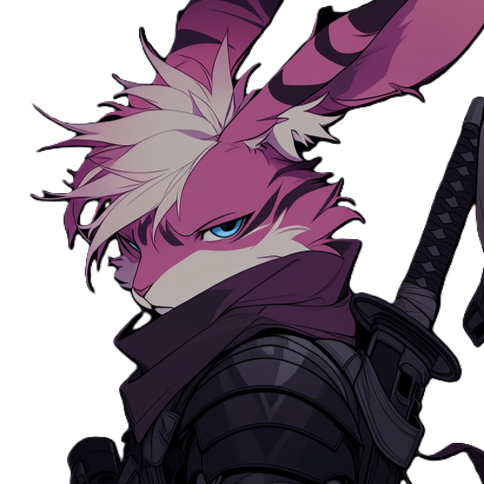 BT - Chapter 1 and
 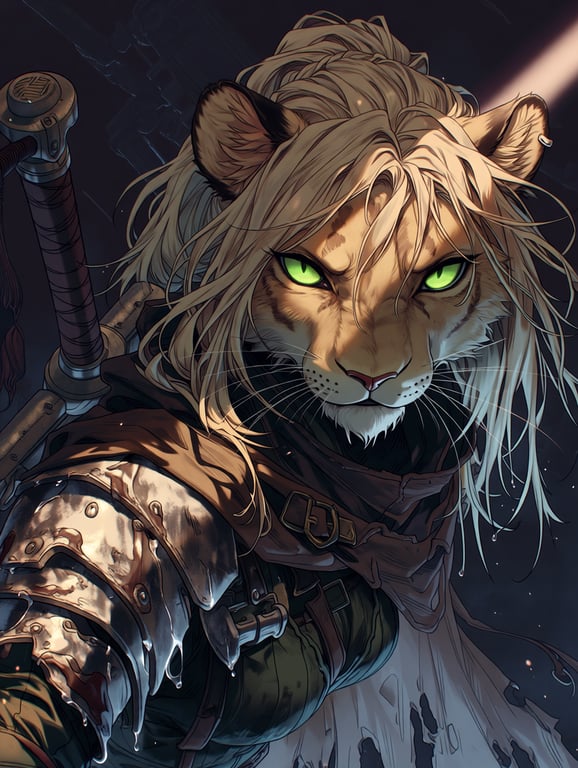 BT - Chapter 3), he references Rio to
 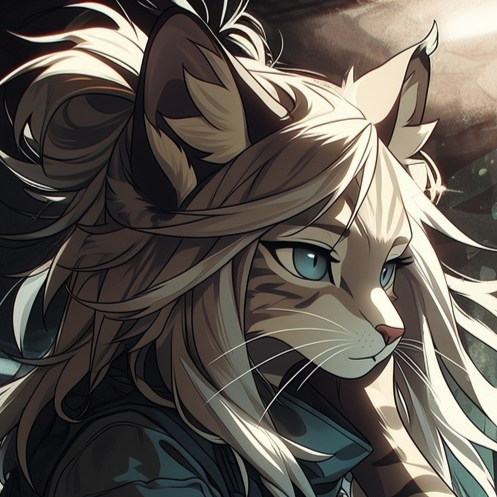 Shiinx as someone who was “like a big sister” to him. The audience hears that truth before they ever meet Rio directly—so when Rio’s POV finally arrives, the tenderness has already been seeded as part of Forza’s emotional map.
Timeline beats (high level)
During the Bethany liberation era, Rio fights as a ground-level shooter in the rebellion that will eventually consolidate into the Sun Jin Empire. In one pivotal engagement during the 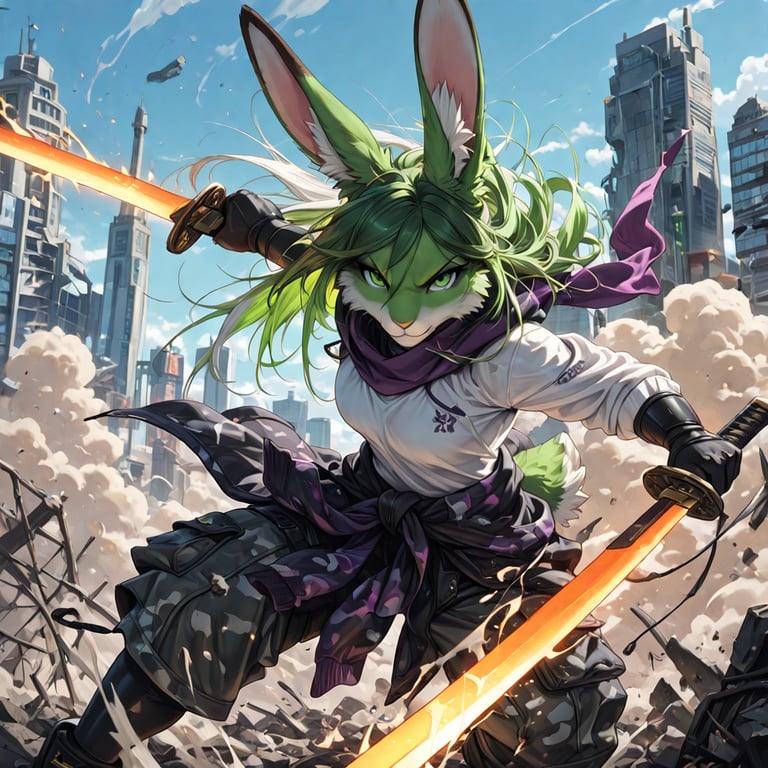 Liberation of Bethany, she is effectively stranded—pinned down, wounded, and otherwise cut off from friendly support—until
 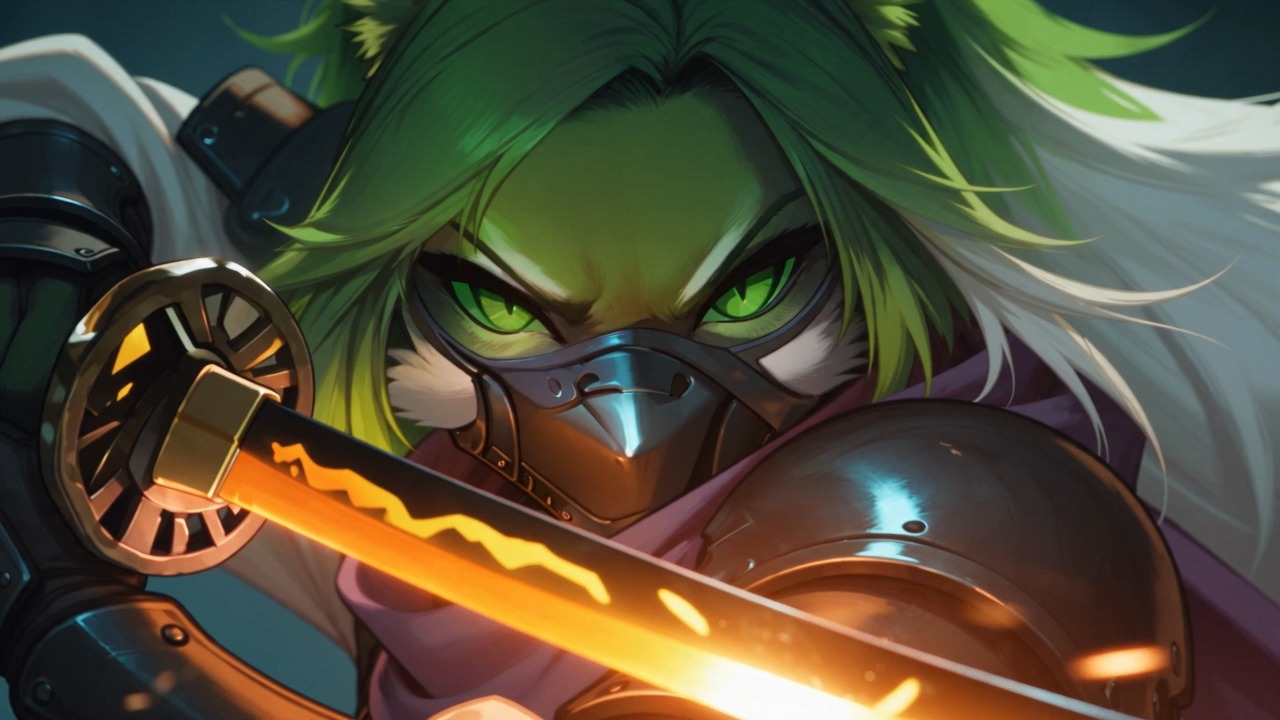 Sun Jin Kaisara enters the fight as overwhelming backup. The encounter is brief but intimate in its own way: the kind of “two soldiers catching a breath behind cover” conversation that makes Kaisara feel real to Rio, not just myth, and leaves Rio with a personal imprint of Kaisara’s competence, calm, and terrifying capability.
Years later (date TBD), Rio retires after “an incident on a mission” that breaks something essential in her. Publicly it’s filed away as operational fallout; privately it becomes the moment her confidence in her own perfection dies. The wound isn’t just physical recovery—it’s the horror of a single irreversible mistake made from a position that was supposed to be controlled, precise, and clean. That fracture expresses as alcoholism, nihilism, and a slow erosion of certainty—an attempt to numb out the dissonance between “liberation hero” and “machine I helped build.” This addiction beat is new to rev3.1, and it changes how Rio’s later choices read: not as clean moral clarity, but as someone crawling out of a fog and trying to become themself again.
When Kaisara reactivates Rio, it begins with a personal summons—not paperwork, not a chain-of-command request, but the new Empress calling Rio in directly. The effect is immediate: Rio is not being “returned to duty,” she is being claimed as an instrument. Kaisara offers proximity, attention, and a kind of access that rewrites what Rio thinks is even possible inside the Sun Jin machine.
Kaisara then formalizes that claim by granting Rio near-unlimited operational clearance. Research stations, armories, transport assets, niche tools—anything Rio will ever need is treated as pre-approved, because the mission is framed as an extension of Kaisara’s own agenda. In practical terms, Rio becomes a special agent who reports directly to Sun Jin Kaisara, carrying the kind of invisible authority that makes doors open without explanation. This is the access credential that later lets Rio simply walk into places like RD10-003: not because the black site is lax, but because Kaisara’s approval sits above the site’s normal custody logic.
Only after that elevation does the assignment lock into place: a mission to hunt 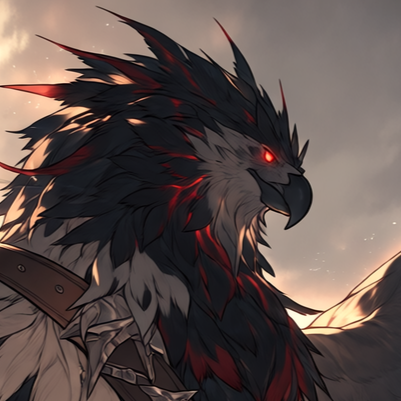 Flarion—a target whose nature and scale pushes the job out of normal military logic and into Kaisara’s private war. Rio is paired with Akima Ciberling as an attached asset and given command of the Silver Slayer, a stealth-retrofitted cutter that signals the mission’s real category: deniable, off-map, and dangerous in ways that don’t show up on public briefings.
Although Rio experiences this as “Kaisara’s mission,” the assignment effectively pulls her under the umbrella of the 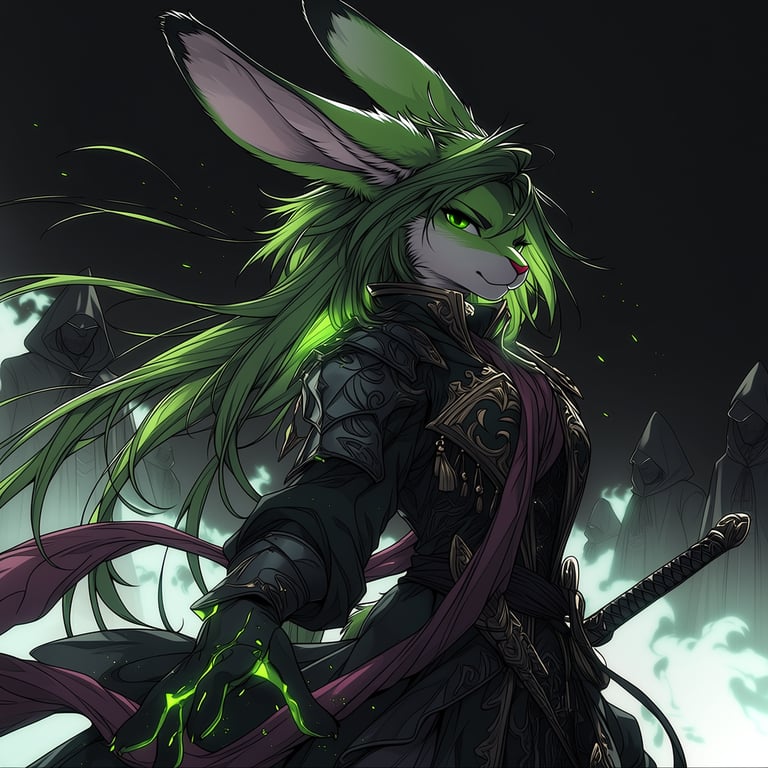 Via Nox Cabal—the hidden coordination layer where Nightfall doctrine and imperial logistics intersect. Rio is not formally briefed on the Cabal as a concept and does not think of herself as one of its agents; she simply operates with Cabal-grade access and deniability without realizing what structure she is actually serving. Over time, Rio does start to infer that some kind of quiet leadership “glue” must exist between
 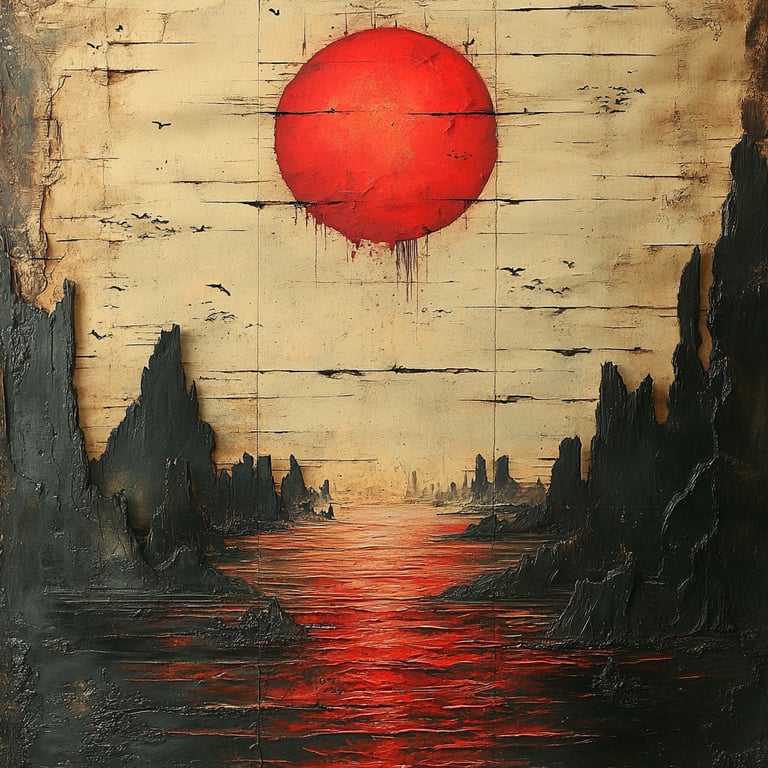 Nightfall Templar and the Sun Jin Empire—a layer of coordination that explains why certain doors open and why certain orders feel pre-decided. The name never reaches her ears, but the shape of the mechanism becomes impossible to ignore.
That covert run brings Rio to Eveny first. There, exposure to the  Neverborn Templar forces her to reclassify “Templar” from rumor/weapon to living moral infrastructure, and she begins to grasp what it would mean for the Sun Jin Empire to enlist the Nightfall Templar. Rio pleads with the Neverborn to act—not out of tribal loyalty, but out of dread at what the Empire could become with Nightfall doctrine and power fully integrated. Around that same time, Rio’s connection with
  Amos reads as a pressure-release valve: potential warmth and attraction inside a situation that otherwise keeps tightening into war.
After Eveny, Rio is dispatched back to  Caisteal under partial secrecy (initially anonymous; later revealed as Kaisara’s hand), and uses her Kaisara-level access to enter RD10-003. The chain that follows—
 RD10-003 Incident into Battle at Birch—is the fulcrum of her modern myth, made worse by the fact that Birch is her hometown. She moves from covert operative to open rupture: choosing violence against her own apparatus, freeing Forza, and triggering a recovery strike that turns her childhood ground into a battlefield with civilian stakes.
After Birch, Rio returns to Eveny carrying the  Gotanenks Armor, reunites with Forza, and is later ambushed by Akima Ciberling (both Rio and Forza survive). Rio is present when the Second Battle of Eveny (Flarion) detonates—an escalation that makes it impossible to pretend any of this is still a “contained” covert operation.
Background: Birch
Rio’s early life in Birch is characterized by small-town routine, family warmth, and practical farm skills. That baseline matters because it establishes what “normal” looks like in the setting—and what Rio loses (or is forced to outgrow) as the plot accelerates toward black sites, pursuit, and empire-scale consequences.
 Made with Bullet