When I reached the beast’s shadow, the cold hesitated.
Within the slow rhythm of its breath, I could borrow a pattern.
Within the shadow of its body, I could gather.
I looked up.
The air changed as I approached, thicker, rich with ancient dust and animal life. The red’s omnipresence became… not weaker, exactly, but less personal, as if the creature’s sheer reality disrupted the way the brightness tried to pour through me.
I moved closer.
Quick take
Templar Dragon is a broad historical classification for exceptionally powerful Templar beasts. Some are true dragons born and raised in draconic form. Others descend from dragons and become powerful enough to transform themselves into one. Despite the name, the category is not limited to literal dragons: beings such as Bezekira belong to the same class while possessing an entirely different bestial form.
Definition
“Templar Dragon” describes a rare class of Templar whose natural or attained existence is closer to a colossal mythic beast than to an ordinary contemporary species. The word dragon became the conventional label, but it is not a strict anatomical requirement. A Templar Dragon may be draconic, feline, or potentially take another monstrous form.
The classification is therefore based less on body shape than on origin, power, and transformation. Its best-known members operate on a demigod scale and belong to the oldest layers of Templar history.
Paths to becoming a Templar Dragon
Born as one
Some Templar Dragons are true dragons from birth. They begin life in a fully bestial form, grow as dragons, and do not need to acquire or construct that nature later.
Transformed through lineage and power
A sufficiently powerful Templar may genetically transform into a dragon, but this route is extraordinarily rare. Power alone is not enough: the Templar must also descend from an actual dragon.
This makes attained dragonhood both a magical accomplishment and an expression of inherited nature. It is not a form available to an unrelated Templar simply through training.
Bestial and contemporary forms
Some natural dragons become powerful enough to shapeshift into contemporary bipedal forms and move among ordinary populations without revealing their true scale. Both Tanuki and Ukatan have used such forms to conceal themselves among others.
This transformation is not fully self-designed. The dragon can assume a contemporary form, but cannot choose exactly what that body will look like. The resulting appearance is not believed to be an inherent expression of the individual rather than a customizable disguise.
A bipedal form can conceal a Templar Dragon’s nature, but it does not make the being an ordinary member of the species it resembles. The form is a manifestation, not a new ancestry.
“Dragon” as a historical name
The category’s name can be misleading. Not every Templar Dragon is a dragon in the literal sense. The term also encompasses other immense Templar beasts whose nature, age, and power place them within the same mythic class.
Bezekira is the clearest exception. She is not draconic, but a gigantic feline monster-creature. Her inclusion establishes that “Templar Dragon” functions as an inherited historical classification for major beasts rather than a narrow biological species label.
The major demigod Templar Dragons
The three principal demigod-scale Templar Dragons in the surviving historical record are:
- Bezekira — a colossal feline beast rather than a literal dragon; counted among the class because of her nature and demigod-level power.
- Ukatan — an outright dragon capable of living behind a contemporary bipedal identity.
- Tanuki — an outright dragon who likewise used a transformed form to hide among later peoples.
Together, Bezi, Ukatan, and Tanuki represent the major historical tier of the classification: ancient Templar beasts whose actions belong to the demigod and deep-history layers of the setting.
The younger dragons of Eveny
Several younger dragons live on  Eveny in service to the
 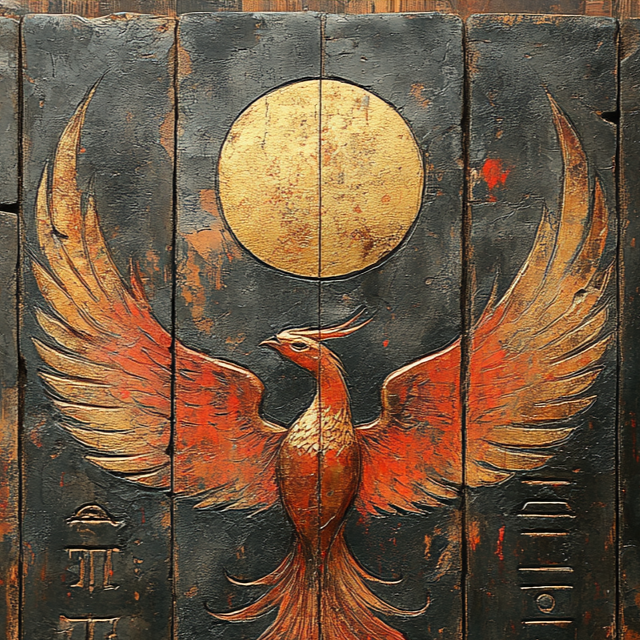 Neverborn Templar. They form a limited protective force for the planet and everything under Neverborn stewardship there.
These dragons are substantially younger than the demigod-scale figures of deep history, but they remain among Eveny’s most powerful Templar. On the battlefield they function as a rare juggernaut force: few in number, exceptionally difficult to oppose, and reserved as living guardians rather than ordinary troops.
Their role is also religious. The Neverborn hold them in exceptionally high regard not only for their strength, but because the dragons are generally understood to possess wisdom beyond what their outward appearance might suggest. They are believed to have reached a level of enlightenment that allows them to understand the cosmic energies of 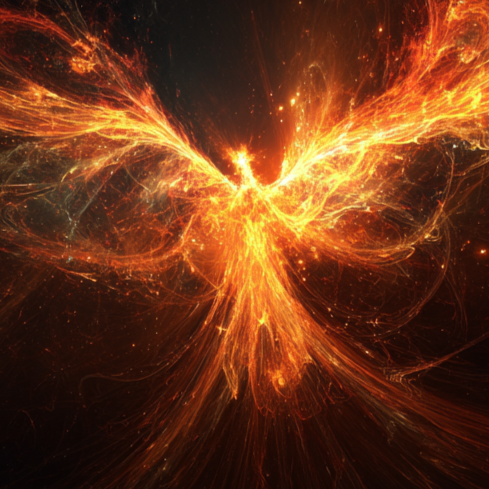 Varuna more deeply than most other living beings. With only a few individual exceptions, the dragons represent the highest tier of Templar power present on Eveny.
The dragons of Eveny show that “Templar Dragon” is not limited to the three ancient demigods. The classification also includes a younger, still-living order of revered planetary guardians—less cosmological in stature, but overwhelming by contemporary standards.
Flarion and the boundary of the classification
His classification remains uncertain, however, because no alternate form is currently known. Unlike Tanuki and Ukatan, Flarion has not been seen shifting into a contemporary bipedal body. Whether transformation is a requirement, merely a common ability among true dragons, or something Flarion possesses but has never demonstrated remains unresolved.
Moral alignment and hostile dragons
Templar Dragon is a classification of nature and power, not a mark of virtue. Although several famous dragons became protectors, teachers, or custodians, the historical record also includes villainous Templar Dragons. Great age, enlightenment, and an unusual understanding of cosmic forces do not guarantee benevolence; those qualities can make a hostile dragon vastly more dangerous.
The darkest example may be the legend surrounding 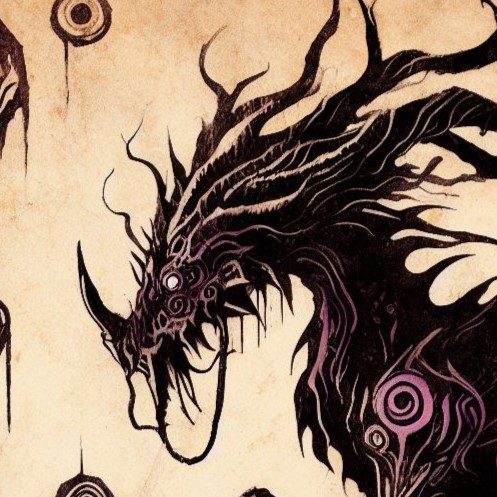 Jethro. Jethro is understood to be bodiless and noncorporeal, yet Templar folklore repeatedly depicts him as a massive black dragon with antler-like horns. Some accounts treat this as a “dragon form,” while others interpret it as nightmare imagery, a symbolic manifestation, or a shape perceived by those he is attempting to reach. Whether Jethro can truly possess such a form remains unresolved.
Rumored Nightfall dragons
The 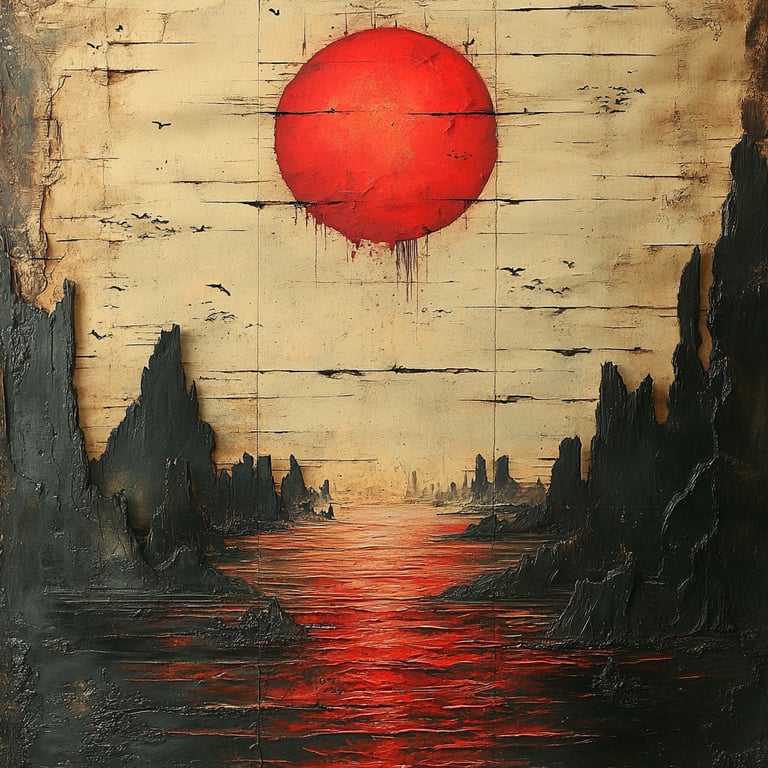 Nightfall Templar are rumored to possess a small number of Templar Dragons of their own. Reliable information is scarce, but the total is generally believed to be no more than ten.
That estimate may be incomplete. 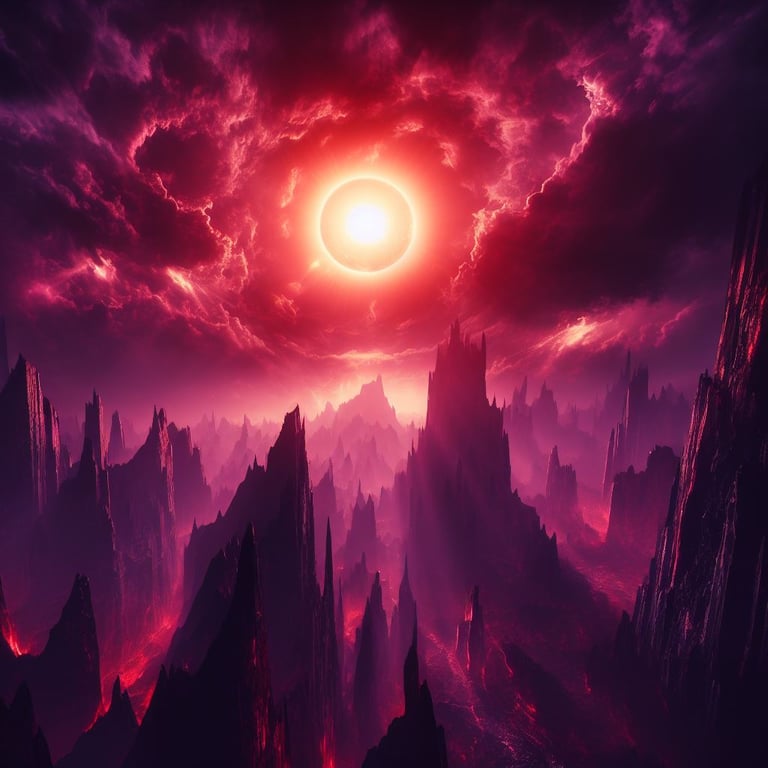 Magnum is an isolated, hostile world where the entire Nightfall tribe resides, and significant portions of its true population and infrastructure may be concealed beneath the surface. If additional dragons are hidden within those spaces, outsiders would have little practical means of discovering them.
The number, identities, and loyalties of the Nightfall dragons remain rumor. “No more than ten” is an outside estimate, not a confirmed census.
Classification notes
- A Templar Dragon may be born as a dragon or attain dragonhood through extraordinary Templar power and direct draconic ancestry.
- Only descendants of actual dragons can follow the transformational route.
- Literal dragon anatomy is not required; other major Templar beasts can belong to the category.
- Some true dragons can assume bipedal forms, but cannot consciously choose the exact appearance of those forms.
- Bezekira, Ukatan, and Tanuki are the principal demigod Templar Dragons currently identified.
 Made with Bullet