Quick take
The Danjians are a canine people native to  Danje. Their civilization is associated with visible power—fortified cities, public monuments, martial display, and a ruling Ciberling family whose authority became inseparable from the state. Their long feud with the neighboring
 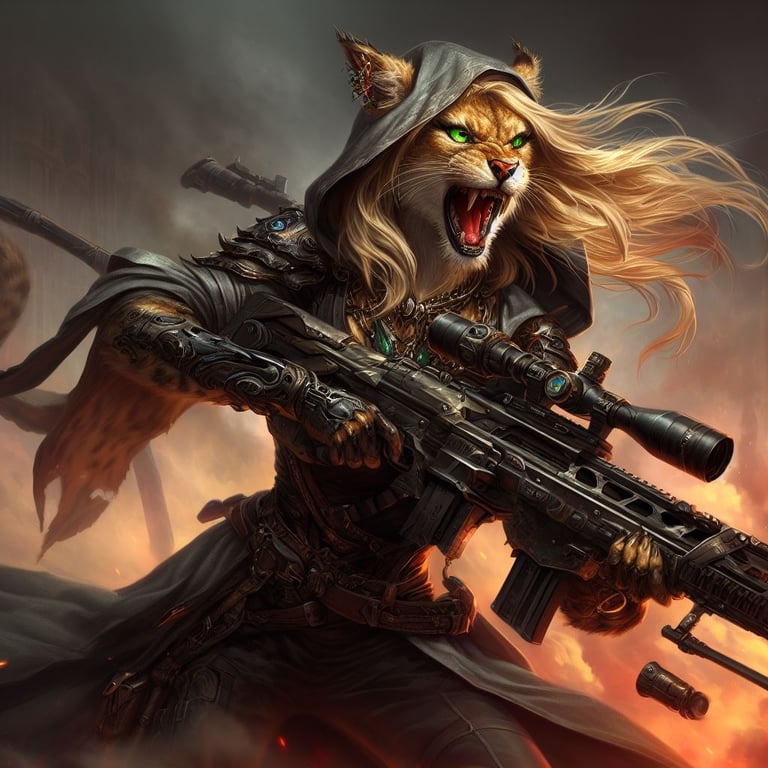 Quallian culminated in the devastating assault on Arken.
Overview
Danjian civilization is concentrated on the homeworld of Danje and centered politically and symbolically on its capital,  Arken. Seen from orbit, Arken is a deliberate display of permanence: towers, stone plazas, and monumental architecture arranged to catch the light. Where Quallian strength is concealed underground, Danjian strength is meant to be witnessed.
The ruling Ciberling family embodies that philosophy. Its members serve as political leaders, military icons, and living symbols of national power. The state surrounding them is described as the Ciberling Empire, though the Danjian people and the Ciberling dynasty are not interchangeable: one is a species and culture, the other its dominant royal house and political order.
Culture and expressions of power
Much of the current account of Danjian culture comes through  Kiara Quall, an enemy commander whose perspective is openly hostile. In her telling, Danjian history is performed beneath “a thousand spotlights”: power appears in parades, public institutions, ancestral names, recruitment imagery, and highly visible military champions.
That description is biased, but the contrast it establishes is central to the Quall–Danje conflict. Quallians survive through concealment, redundancy, and the willingness to abandon what an enemy can see. Danjians project stability through architecture, reputation, and concentrated force. Arken itself embodies this preference—a capital designed not merely to function, but to declare that Danjian authority is permanent and impossible to overlook.
The Quallian–Danjian feud
Danje and  Quall are neighboring worlds in the same solar system. Their peoples fought over moons, cometary water, asteroid mining access, and the strategic territory between their planets. The original cause of the feud was eventually lost beneath accumulated grievances, sabotage, assassination attempts, and retaliatory violence.
Neither side could decisively conquer the other. Danje’s orbital defenses made a conventional Quallian attack prohibitively costly, while Quallian fleets and concealed infrastructure made Quall equally difficult to subdue. Systems Alliance mediation produced treaties, but the agreements were weakly enforced and repeatedly used as propaganda by both sides.
The conflict also became intensely personal through the rivalry between 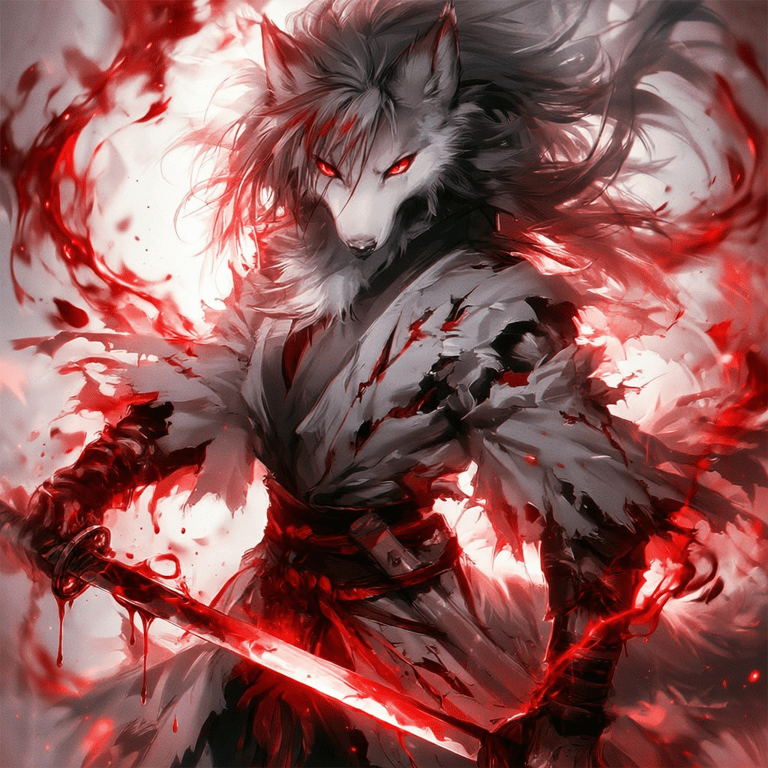 Akima Ciberling and Kiara Quall. Akima was Danje’s most visible war-icon; Kiara studied her as both a strategic threat and the embodiment of everything she despised about Ciberling power.
The assault on Arken
On 9.10.40, Kiara led a surprise attack against Danje after a resistance movement disabled key polar defenses. The operation was intended to seize the Ciberling royal family, not occupy the planet. Capturing the dynasty could destabilize Danjian leadership and give Quall leverage to end the war before Danje’s scattered forces returned.
The plan unraveled inside Arken.  Krieg Ciberling, patriarch of the ruling family, attempted to redirect Kiara by offering Akima’s location. Kiara divided her assault force to pursue both targets. Quallian troops ultimately found Krieg dead at the space center while a shuttle escaped the planet; Akima had killed her father after learning that he intended to trade her away to save himself.
With the hostage operation lost and Akima beyond pursuit, Kiara ordered a bombardment of Arken’s command infrastructure. What she intended as a precise military strike spread far beyond its target. The capital complex became an inferno, civilian casualties mounted, and the attack became Kiara’s greatest regret.
The Quallian Assault on Arken was not the end of the Danjian people or their state, but it was a defining national trauma. Because Danjian civilization was small and heavily concentrated on one world, devastation in its capital carried military, political, and psychological consequences far beyond the city itself.
Retaliation and the wider war
Five days after Arken burned, the 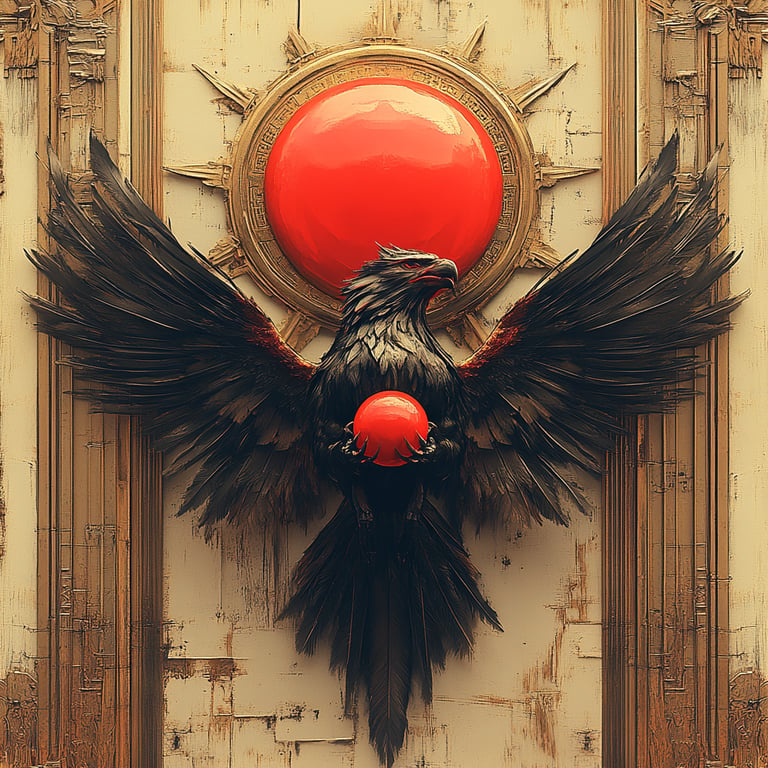 Sun Jin Empire arrived at Quall under the pretense of investigating the attack. Akima had deliberately directed imperial attention toward the Quallians as revenge for the destruction of her home.
The Sun Jin capital ship Esther then devastated Quall’s surface settlement and tore into the ground above its subsurface city. The assault transformed a local feud into part of a much larger imperial conflict. Arken and Quall became paired catastrophes: each people suffered a devastating strike against the concentrated heart of its civilization, and each survived with new grievances that reached beyond the old planetary rivalry.
For Akima, the attack also became an encounter with 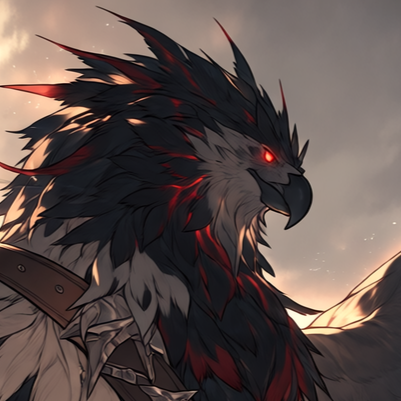 Flarion and the beginning of her hunger for Templar power. Her later narration aboard the Silver Slayer shows that Danjian identity, the loss of home, and the need never to become powerless prey again remain central to her ambition—even as her loyalty belongs ultimately to herself rather than to Danje or any empire.
Known Danjians
- Krieg Ciberling — patriarch of the Ciberling royal family and Danje’s political leader during the assault on Arken; comparatively pragmatic and capable of negotiation, but killed by Akima after attempting to use her as a bargaining chip.
- Akima Ciberling — Krieg’s daughter, Danje’s most visible war-icon, and a ruthless close-quarters combatant whose pursuit of revenge and Templar power continues after Arken’s destruction.
Primary appearances
- BT - Chapter 4 — Danjian culture through Kiara’s perspective, the Quall–Danje feud, Danje’s defenses, and the assault on Arken
- BT - Chapter 5 — the retaliatory assault on Quall and the conflict’s expansion into the Sun Jin war
- BT - Chapter 14 — Akima’s account of revenge, divided loyalties, and her desire for Templar power
- BT - Chapter 15 — Akima’s private creed of strength, dominance, and resistance in Rio Narro’s POV
 Made with Bullet